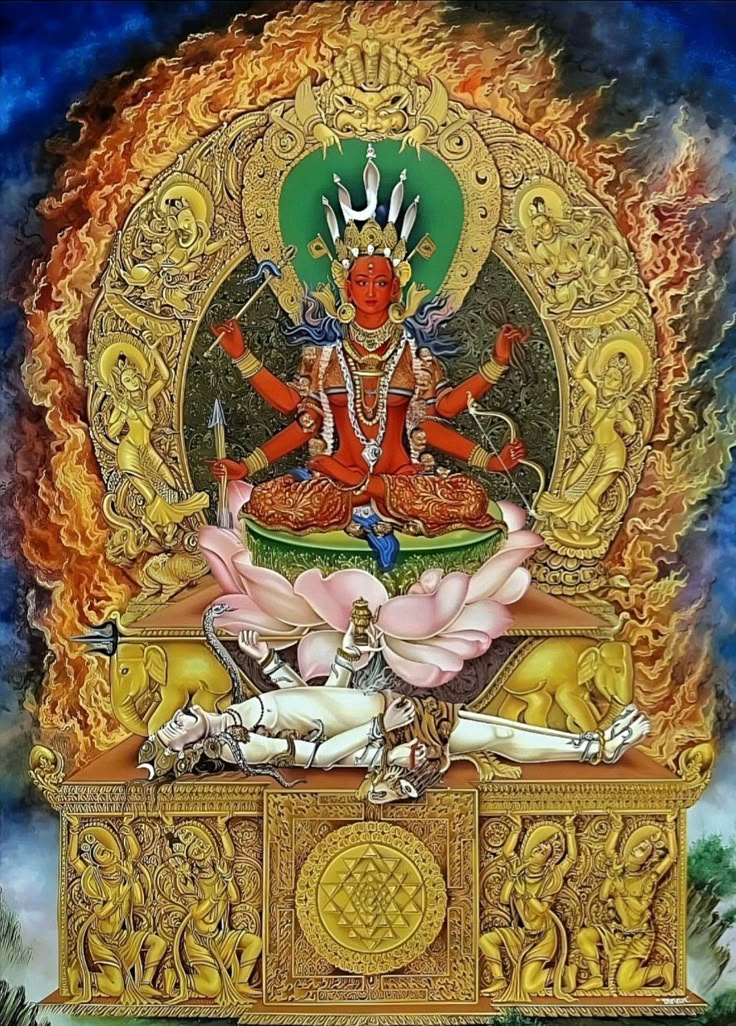
What is the Devi Atharvashirsham?
The Devi Atharvashirsham (देव्यथर्वशीर्षम्), also known as Shridevyatharvashirsham (श्रीदेव्यथर्वशीर्षम्), is a sacred Sanskrit hymn dedicated to Mahadevi, the Supreme Goddess. Revered in Shakta upasana, this profound Devi stotra presents the Goddess as Brahmasvarupini, the embodiment of the supreme reality and the source of the entire universe. In this sacred dialogue, the devas ask Mahadevi about her true nature, and she reveals herself as the supreme divine power underlying creation, preservation, and dissolution. The hymn identifies the Goddess with the manifest and unmanifest universe, Prakriti and Purusha, and the divine powers worshipped as Brahmani, Vaishnavi, Rudrani, Mahalakshmi, and other forms of Shakti. Devi Atharvashirsham is widely recited during Navratri, Durga Puja, and daily Devi worship, and is also associated with the devotional practices surrounding the Durga Saptashati and Chandi Path.
What are the spiritual benefits of chanting the Devi Atharvashirsham?
Chanting the Devi Atharvashirsham is a revered practice in Shakta tradition that deepens devotion to Mahadevi and contemplation of her supreme nature. Regular recitation is traditionally believed to bestow Devi's grace, strengthen spiritual resolve, dispel fear, and help overcome inner obstacles. The hymn encourages devotees to recognise the Divine Mother as the underlying reality of all existence, cultivating humility, inner steadiness, spiritual discernment, and surrender to Shakti. Its recitation is especially valued during Devi upasana, Navratri sadhana, Durga Puja, and other observances dedicated to the Divine Mother. The traditional phalashruti associates sincere recitation with spiritual merit and divine blessings.
When is the best time to recite the Devi Atharvashirsham?
The Devi Atharvashirsham may be recited daily at a convenient and peaceful time, preferably after bathing and completing one's morning prayers. Brahma Muhurta and sunrise are traditionally favoured for spiritual practices because of the quiet and contemplative atmosphere. Fridays, Ashtami, Navami, Purnima, and especially the nine days of Sharadiya and Chaitra Navratri are auspicious occasions for Devi upasana. Many devotees also recite the hymn during Durga Ashtami, Maha Navami, and Durga Puja, or as part of their Chandi Path observances. Those following a particular sampradaya or family tradition may observe its prescribed time, sequence, and rules of worship.
Can pregnant women chant the Devi Atharvashirsham?
Yes. Pregnant women may generally chant or listen to the Devi Atharvashirsham as a devotional practice, according to their comfort and personal tradition. Reciting the hymn calmly can provide a meaningful opportunity for prayer, reflection, and connection with the Divine Mother. There is no need to strain the voice, sit in an uncomfortable posture, or observe demanding fasting practices to chant this stotram. Devotees may pray to Mahadevi for the well-being of the mother and child, while continuing all appropriate prenatal care and following medical advice.
How should one chant or practice the Devi Atharvashirsham?
Begin by bathing or washing your hands and face, and sit in a clean, quiet place before an image or murti of Devi, if available. Light a diya and offer flowers, kumkum, or water according to your means and family tradition. Facing east during morning worship is a common practice, although the specific direction is not essential for every form of devotional recitation. Begin with a prayer to your Ishta Devi or Guru, then chant the Devi Atharvashirsham in Sanskrit with attention to pronunciation, rhythm, and the sequence of verses. Listening to a reliable recitation can help with correct uchcharana. You may conclude with a prayer to Mahadevi and offer the fruits of your practice to the Divine Mother. During Navratri or Durga Puja, the hymn may be included in a broader Devi worship routine or recited alongside the Durga Saptashati when appropriate to your tradition. Sincere bhakti, consistency, and respectful recitation are more important than elaborate ritual arrangements.