What is the Gajendra Moksha Stotram?
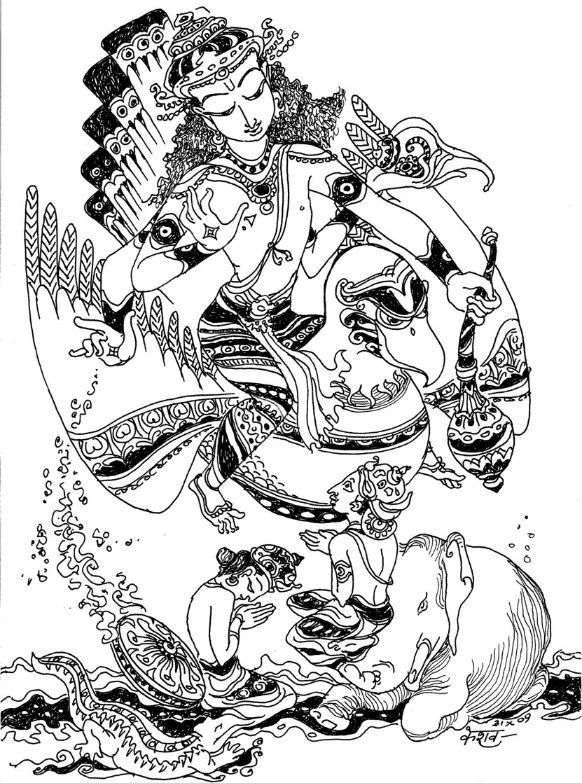
The Gajendra Moksha Stotram (गजेन्द्र मोक्ष स्तोत्र) is a powerful Sanskrit hymn found in the Eighth Skandha (Book 8), Chapter 3 of the Shrimad Bhagavatam (Bhagavata Purana). It narrates the story of King Gajendra, who, in his next birth as an elephant, was caught by a crocodile (Makara or Huhu), and called upon Lord Vishnu for help. This divine stotra — a heartfelt prayer of surrender — led to the Lord’s direct intervention and Gajendra’s liberation. The hymn symbolizes the soul’s surrender to God and the grace that follows pure devotion.
Where does the Gajendra Moksha Stotra come from?
The Gajendra Moksha Stotra originates from the Bhagavata Purana, one of the most revered scriptures of Sanatana Dharma, authored by Sage Vyasa. The story occurs in the eighth canto and is told by Sage Shukadeva to King Parikshit. It represents the essence of Bhakti Yoga — complete surrender (Atma Nivedanam) to the Supreme Lord. In the stotra, Gajendra recites profound verses glorifying the Lord as the eternal savior, illustrating that true devotion transcends species, circumstance, and suffering.
What is the meaning and spiritual significance of the Gajendra Moksha Stotram?
The Gajendra Moksha Stotram expresses the purest form of Bhakti (devotion) — the surrender of the soul to the divine will of Lord Vishnu. The hymn teaches that when a devotee calls upon God with complete faith and humility, the Lord Himself responds immediately, regardless of time or form. Spiritually, the stotra represents liberation from the crocodile of worldly attachments, ego, and ignorance. It reminds seekers that divine grace is attained not through power or intellect, but through absolute surrender and trust in the Supreme.
What are the benefits of chanting the Gajendra Moksha Stotram daily?
Chanting the Gajendra Moksha Stotram daily brings peace, protection, and spiritual liberation. It removes mental and emotional struggles, destroys fear and negative karma, and protects from unseen dangers. Devotees believe that reciting this hymn with devotion grants moksha (salvation) and helps overcome obstacles, diseases, and crises. The stotra also purifies the mind, strengthens surrender, and enhances one’s connection with Lord Vishnu’s infinite compassion and power.
What are the astrological and spiritual benefits of the Gajendra Moksha Stotra?
Astrologically, the Gajendra Moksha Stotram is especially effective as a remedy for a debilitated or afflicted Jupiter (Guru), particularly when placed in Capricorn or the 10th house of a birth chart. It pacifies planetary afflictions involving water elements, Rahu-Ketu doshas, and karmic turbulence connected to professional and spiritual challenges. Regular recitation stabilizes emotions, enhances wisdom, and protects from hidden enemies. Spiritually, it deepens faith, humility, and divine surrender (Sharanagati), helping devotees experience inner peace and Vishnu’s grace during difficult planetary transits or life transformations.
What is the best time to recite the Gajendra Moksha Stotram?
The best time to chant the Gajendra Moksha Stotram is during Brahma Muhurta (pre-dawn) or sunrise hours, when the atmosphere is calm and conducive to spiritual focus. It’s especially auspicious to recite it on Ekadashi, Thursdays, Vaikuntha Ekadashi, and during Shravana month or Vishnu Puja. Devotees often face east or sit near water while chanting, symbolically connecting with Gajendra’s heartfelt plea in the cosmic river of life.
Can pregnant women chant the Gajendra Moksha Stotram?
Yes, pregnant women can safely and beneficially chant the Gajendra Moksha Stotram. It is known to bring emotional strength, protection, and divine calmness to both mother and child. The story’s theme of deliverance and divine rescue symbolizes safety during vulnerable times. Reciting it softly during mornings or listening to its recitation helps ease anxiety, stabilize thoughts, and invoke Lord Vishnu’s nurturing energy throughout pregnancy.