अथ श्री मातृपञ्चकम् ।
मुक्तामणि त्वं नयनं ममेति
राजेति जीवेति चिर सुत त्वम् ।
इत्युक्तवत्यास्तव वाचि मातः
ददाम्यहं तण्डुलमेव शुष्कम् ॥१॥
“You are the pearl of my eyes, my prince, may you live long, my dear son!” — these were the loving words you once spoke, O Mother! Today, as I perform your funeral rites, into that same mouth I can only place a few dry grains of rice.
“तुम मेरे नेत्रों के मोती हो, मेरे राजकुमार, दीर्घायु हो, हे पुत्र!” — ऐसे स्नेहभरे शब्द जो आपने कभी कहे थे, हे माँ! आज उसी आपके मुख में मैं केवल कुछ सूखे ताँदुल (चावल के दाने) अर्पित कर रहा हूँ।
अम्बेति तातेति शिवेति तस्मिन्
प्रसूतिकाले यदवोच उच्चैः ।
कृष्णेति गोविन्द हरे मुकुन्द
इति जनन्यै अहो रचितोऽयमञ्जलिः ॥२॥
At the time of my birth, you cried out loudly — “Mother! Father! Shiva!” and in pain invoked, “Krishna! Govinda! Hare! Mukunda!” To that selfless mother who endured so much, I now bow down with folded hands and offer my heartfelt salutations.
प्रसूति के समय आपने वेदना में ऊँचे स्वर में पुकारा — “अम्बे! ताते! शिवे!” और पीड़ा में कहा “कृष्ण! गोविन्द! हरे! मुकुन्द!” — ऐसी पीड़ित किन्तु करुणामयी माता को मैं आज श्रद्धापूर्वक नमस्कार करता हूँ, उन्हें प्रणाम अर्पित करता हूँ।
आस्तां तावदियं प्रसूतिसमये दुर्वारशूलव्यथा
नैरुच्यं तनुशोषणं मलमयी शय्या च सांवत्सरी ।
एकस्यापि न गर्भभारभरणक्लेशस्य यस्याक्षमः
दातुं निष्कृतिमुन्नतोऽपि तनयस्तस्यै जनन्यै नमः ॥३॥
At the time of giving birth to me, O Mother!, you suffered from unbearable pain. You did not speak of the unbearable labor pains you suffered during childbirth, the year-long discomfort, the weakness, and the impure bed that was your resting place. Even the greatest of sons cannot ever repay a mother for even a single moment of the pain she endures while carrying him. To that divine mother, I bow down in reverence.
जन्म के समय की उस असह्य पीड़ा, वर्षभर की असुविधा, क्षीण देह और मलिन शय्या को एक ओर रख दें — फिर भी कोई भी पुत्र, चाहे कितना भी महान क्यों न हो, गर्भधारण के एक भी क्षण की वेदना का प्रतिदान नहीं दे सकता। ऐसी जननी को मेरा कोटि-कोटि प्रणाम।
गुरुकुलमुपसृत्य स्वप्नकाले तु दृष्ट्वा
यतिसमुचितवेशं प्रारुदो मां त्वमुच्चैः ।
गुरुकुलमथ सर्वं प्रारुदत्ते समक्षं
सपदि चरणयोस्ते मातरस्तु प्रणामः ॥४॥
When you dreamt of me wearing the robes of a renunciate (a monk), you ran to the Gurukula, weeping loudly. Seeing your tears, the entire hermitage wept with you. O Mother, before your sacred feet I bow down again and again.
जब आपने स्वप्न में मुझे संन्यासी के वस्त्रों में देखा, तो आप रोती हुई गुरुकुल तक आ पहुँचीं। आपके आँसू देखकर समस्त आश्रम भी रो पड़ा। हे माता! आपके चरणों में मैं सादर प्रणाम करता हूँ।
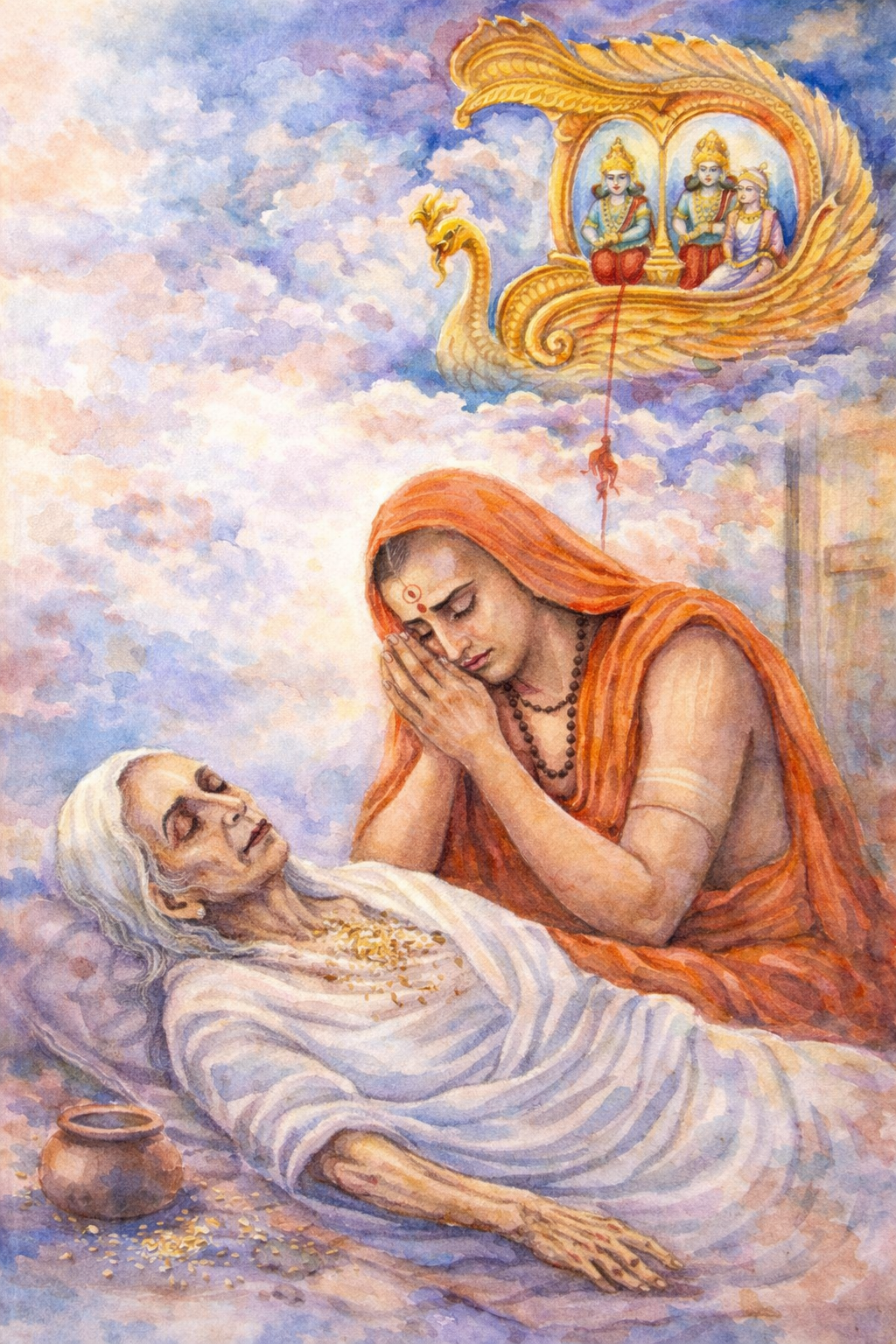
न दत्तं मातस्ते मरणसमये तोयमपिवा
स्वधा वा नो दत्ता मरणदिवसे श्राद्धविधिना ।
न जप्त्वा मातस्ते मरणसमये तारकमनु-
रकाले सम्प्राप्ते मयि कुरु दयां मातुरतुलाम् ॥५॥
At the time of your passing, O Mother, I was not there to offer even a drop of water or the sacred oblations prescribed by rite. Nor did I chant for you the liberating Taraka Mantra as your soul departed. I have come too late, O compassionate Mother — bestow upon me your boundless grace and forgiveness.
हे माता, जब आपका देहांत हुआ, मैं उपस्थित नहीं था — न मैंने आपको एक बूँद जल दिया, न श्राद्धविधि से स्वधा अर्पित की, न ही आपके प्राण-प्रस्थान के समय तारक मंत्र का जाप कर सका। मैं देर से आया हूँ — अब आप मुझ पर अपनी अतुलनीय करुणा बरसाइए।

![Wallpaper Image for 'शीतला कवच स्तोत्र - Sheetala Mata Kavach Stotram [with Nyasa, Viniyoga, Dhyana & Phalashruti] Sanskrit Lyrics To Cure Diseases'](/assets/image/sheetalamata.webp?nf_resize=fit&w=600&format=webp)