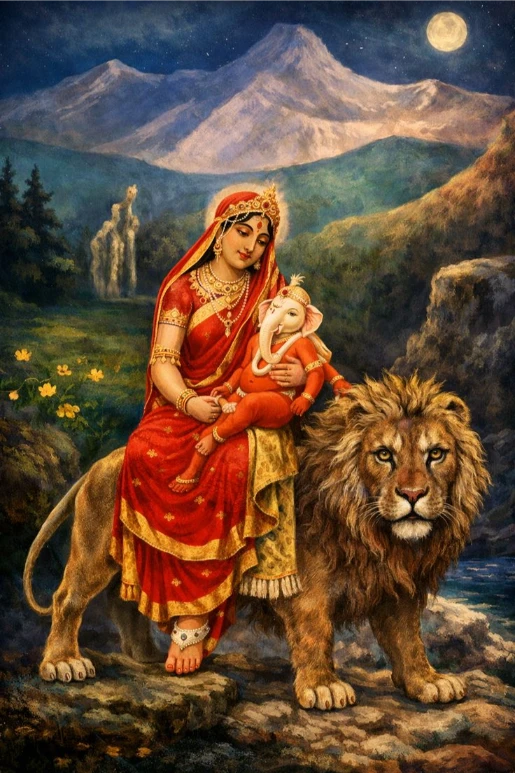
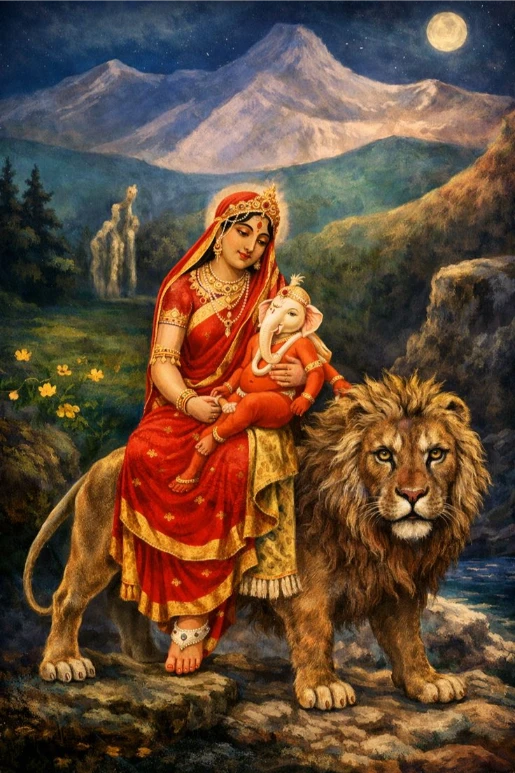
What is Parvati Ashtottara Shatanamavali?
Parvati Ashtottara Shatanamavali is a devotional Sanskrit hymn composed of 108 divine names of Goddess Parvati — the beloved consort of Lord Shiva and the embodiment of Shakti (divine feminine energy), compassion, strength, and universal motherhood. Each of these 108 names glorifies Her divine qualities, attributes, and roles, making this stotra a powerful prayer for protection, blessings, and spiritual upliftment.
Where does Parvati Ashtottara Shatanamavali come from?
Parvati Ashtottara Shatanamavali is traditionally recited in devotional worship to Goddess Parvati. It draws from names and attributes found in major devotional scriptures such as the Devi Bhagavata Purana, Shiva Purana, and other stotra collections. The 108 names reflect Parvati’s role as Uma, Gauri, Jagadambika, Durga, and protector of devotees.
What are the benefits of chanting Parvati Ashtottara Shatanamavali daily?
Chanting Parvati Ashtottara Shatanamavali daily brings divine blessings of inner strength, emotional balance, mental peace, protection from negativity, and family harmony. It is also believed to help in strengthening marital relationships, enhancing compassion, nurturing devotion, attracting prosperity, and dissolving fear and stress. Devotees recite these sacred names during festivals like Navaratri or as part of daily puja for spiritual upliftment.
What are the astrological benefits of chanting Parvati Ashtottara Shatanamavali?
Astrologically, chanting the 108 names of Parvati helps harmonize energies linked with the Moon (Chandra) for emotional stability and calmness, and Venus (Shukra) for love, harmony, and relationships. Regular recitation is believed to ease stress from Moon afflictions (such as emotional imbalance or anxiety) and improve relational peace and prosperity, especially when celebrated during auspicious festivals or personal milestones.
What is the best time to chant Parvati Ashtottara Shatanamavali?
The most auspicious times to chant Parvati Ashtottara Shatanamavali are Brahma Muhurta (early morning) and evening Sandhya, when the mind is tranquil and receptive to devotional vibrations. Chanting during special occasions like Navaratri, Sharad Navaratri, Mahashivaratri, and Fridays (traditionally auspicious for Shakti worship) amplifies its spiritual impact. Many devotees recite it during daily puja or before meditation.
Can women chant Parvati Ashtottara Shatanamavali during their periods?
Yes. Women may chant or mentally recite Parvati Ashtottara Shatanamavali during menstruation if they feel spiritually comfortable. In Shakti and Parvati worship, the emphasis is on devotion, pure intention, and heartfelt connection rather than rigid ritual restrictions. Chanting softly or silently is considered fully acceptable and continues the devotional practice without interruption.
Can pregnant women safely chant Parvati Ashtottara Shatanamavali?
Yes, pregnant women can safely chant Parvati Ashtottara Shatanamavali. The stotra’s gentle, loving vibrations of Goddess Parvati’s 108 names foster emotional balance, mental calmness, and divine protection for both mother and child. Many expectant mothers find peace, strength, and spiritual support through regular recitation during pregnancy.