The Rudrashtakam is a famous Sanskrit hymn dedicated to Lord Shiva and composed by the great saint-poet Goswami Tulsidas. It appears in the Uttara Kanda of the Ramcharitmanas, one of the most revered devotional texts in Hindu tradition. The word 'Rudrashtakam' means 'eight verses in praise of Rudra (Shiva)'. In this powerful stotra, Tulsidas glorifies Lord Shiva as the formless, all-pervading Brahman, the compassionate destroyer of ignorance, and the supreme reality beyond creation. Because of its deep philosophy and devotional intensity, the Rudrashtakam is widely chanted in Shiva temples and during daily Shiva worship.
What is the spiritual meaning of the Rudrashtakam?
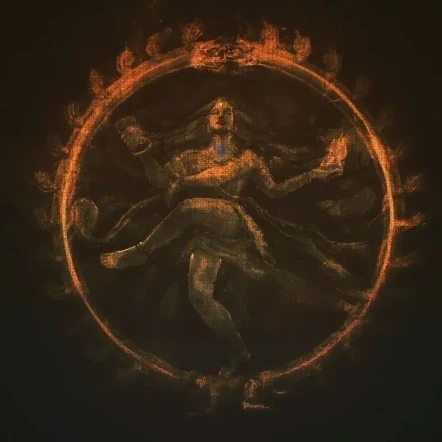
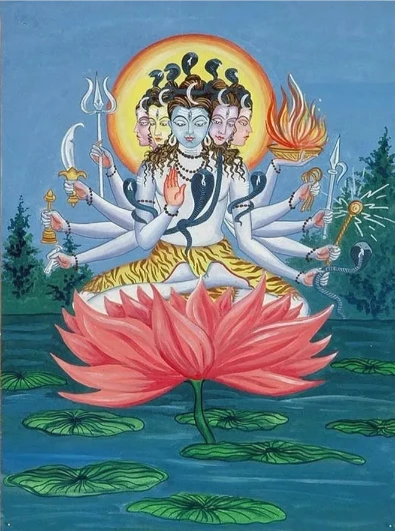
The Rudrashtakam describes Lord Shiva as the infinite, formless, and all-pervading consciousness that transcends the material universe. The hymn praises Shiva as Nirguna Brahman (the attributeless absolute), the cosmic source of creation, and the compassionate protector of devotees. It also portrays iconic aspects of Shiva such as the Ganga flowing from his matted hair, the crescent moon on his forehead, the serpent around his neck, and the blue throat (Neelkantha). Spiritually, the stotra teaches that devotion to Shiva leads to liberation from worldly suffering, ignorance, and the cycle of birth and death.
What are the benefits of chanting the Rudrashtakam?
Chanting the Rudrashtakam with devotion is believed to bring inner peace, spiritual protection, and divine grace from Lord Shiva. Devotees recite this Shiva stotra to remove negativity, reduce stress, and overcome obstacles in life. The hymn itself states that those who chant it with devotion please Lord Shambhu and receive his blessings. Regular recitation is believed to purify the mind, strengthen faith, increase spiritual awareness, and support progress toward moksha (liberation).
How does chanting the Rudrashtakam help in Vedic astrology remedies?
In Vedic astrology, Lord Shiva is closely associated with powerful planetary energies, especially Saturn (Shani), the Moon (Chandra), and Rahu-Ketu influences. Chanting the Rudrashtakam is considered a spiritual remedy to calm intense karmic energies, reduce the effects of difficult planetary periods (such as Shani Sade Sati), and balance emotional or mental disturbances related to the Moon. Devotional recitation of Shiva stotras is also believed to reduce negative karma and bring stability, patience, and spiritual strength.
When is the best time to chant the Rudrashtakam?
The Rudrashtakam can be chanted daily, but it is especially powerful when recited during Brahma Muhurta (early morning), during evening Shiva worship, or while performing meditation on Lord Shiva. Auspicious occasions include Mondays (the day dedicated to Shiva), Pradosh Vrat, Maha Shivaratri, and the holy month of Shravan (Sawan). Many devotees chant this hymn while offering water, milk, or bilva leaves to the Shiva Lingam.
Why is the Rudrashtakam considered one of the most powerful Shiva stotras?
The Rudrashtakam combines deep Vedantic philosophy with intense devotion, presenting Lord Shiva as both the supreme cosmic consciousness and the compassionate protector of devotees. The verses describe Shiva as the timeless, formless Brahman while also celebrating his divine form as Shankar, Neelkantha, and the lord of all beings. Because of this powerful blend of philosophy, symbolism, and devotion, the Rudrashtakam is regarded as one of the most spiritually uplifting hymns for connecting with Lord Shiva and experiencing inner transformation.

![रुद्राष्टकम स्तोत्र (नमामि शमीशान निर्वाण रूपम) अर्थ सहित - Rudra Ashtakam Stotram with Meaning [Sanskrit Lyrics]](/assets/image/shri-rudrashtakam-lyrics-meaning-tulsidas.webp?nf_resize=fit&w=1200)