What is the Saraswati Ashtakam in the Padma Purana?
The Saraswati Ashtakam is a sacred Sanskrit hymn dedicated to Goddess Saraswati, the Hindu goddess of knowledge, wisdom, speech, music, and learning. This stotra appears in the Padma Purana and is connected with a profound spiritual dialogue involving King Shatanika, Sage Shaunaka, Yudhishthira, Bhishma, and the divine teacher Brihaspati. In the narrative, Brihaspati praises Goddess Saraswati and receives divine knowledge through her grace. The hymn reveals Saraswati as the source of pure wisdom that removes ignorance (kumati) and grants spiritual knowledge, eloquence, and enlightenment.
What is the spiritual meaning of the Saraswati Ashtakam?
The Saraswati Ashtakam teaches that divine knowledge and wisdom come from the grace of Goddess Saraswati, the embodiment of speech (Vāk), intelligence, and spiritual insight. The verses describe how even great sages and scholars remain bound by karma until they realize higher truth through divine knowledge. By praising Saraswati with devotion, the devotee receives pure knowledge that destroys ignorance, awakens clarity of thought, and leads toward the supreme state (moksha). The hymn therefore highlights Saraswati as the guiding force behind learning, creativity, intellect, and spiritual awakening.
What are the benefits of chanting the Saraswati Ashtakam?
According to the Padma Purana, chanting the Saraswati Ashtakam with devotion brings the blessings of knowledge, wisdom, eloquence, and intellectual clarity. The hymn promises that devotees who recite it regularly can gain rare spiritual knowledge that is difficult even for great seekers to attain. Students, scholars, writers, musicians, and spiritual aspirants often chant this Saraswati stotra to improve concentration, memory, learning ability, speech, and creativity. With the grace of Mahamaya Saraswati, the devotee can overcome ignorance and move toward spiritual wisdom and liberation.
When is the best time to chant the Saraswati Ashtakam?
The hymn itself recommends reciting the Saraswati Ashtakam during the three sandhyas—dawn, noon, and dusk (trisandhya). Chanting the stotra daily at these sacred times with devotion and purity of intention is believed to invite the constant presence of Goddess Saraswati. Many devotees also recite this stotra before study, exams, artistic practice, or spiritual learning. It is especially auspicious during festivals connected with Saraswati such as Vasant Panchami (Saraswati Puja) and Navaratri.
How does Saraswati Ashtakam help in gaining knowledge and wisdom?
The Saraswati Ashtakam praises the Goddess as the divine source of all knowledge, speech, and learning. According to the hymn, those who chant it sincerely receive 'nirmala jnana'—pure knowledge that destroys ignorance and wrong understanding. Devotees believe that Saraswati’s grace enhances memory, clarity of expression, creativity, and intellectual insight. Because of this, the stotra is widely recited by students, teachers, researchers, and spiritual seekers who wish to deepen their understanding of both worldly knowledge and spiritual truth.
Why does the Saraswati Ashtakam emphasize knowledge at the time of death and liberation?
The opening dialogue in the hymn asks an important spiritual question: what mantra or remembrance leads the soul to the supreme state at the time of death. This reflects a common theme in Hindu scriptures that the final remembrance (antim smarana) determines the soul’s spiritual destination. By cultivating knowledge, devotion, and remembrance of the divine through prayers like the Saraswati Ashtakam, devotees prepare their mind for higher awareness and liberation (moksha). Thus the hymn connects learning, wisdom, and devotion with the ultimate goal of spiritual freedom.
Shatanik says, O Supreme-minded, O supremely wise, O master of all the sacred sciences! Even the best among men and the greatest of Brahmins remain bound by the endless chains of karma.
शतानीक ने कहा, हे महामति, हे महाज्ञानी, हे समस्त शास्त्रों के ज्ञाता! यहाँ तक कि श्रेष्ठ ब्राह्मण और महान पुरुष भी अनंत कर्मबंधन में बंधे रहते हैं।
मरणे यज्जोपेज्जाप्यंयं च भावमनुस्मरन् ।
परं पदमवाप्नोतितन्मे ब्रूहि महामुने ॥2॥
O Great Sage, please tell me- What mantra should one chant at the time of death? What feeling should one hold in the heart? What leads the soul to the Supreme state?
हे महर्षि! कृपया मुझे बताइए — मृत्यु के समय कौन सा मंत्र जपना चाहिए? मन में कौन सा भाव रखना चाहिए? क्या आत्मा को परम पद (मोक्ष) तक पहुँचाता है?
Shaunak says, O King, Yudhishthira, the son of Dharma and the knower of righteousness, once asked this very question of his grandsire, Bhishma — the most exalted among the wise.
शौनक ने कहा, हे राजन्! युधिष्ठिर, जो धर्मपुत्र हैं और धर्म को जानने वालों में श्रेष्ठ हैं, उन्होंने अपने पितामह भीष्म से यही प्रश्न किया था — जो विद्वानों में श्रेष्ठ थे।
Yudhishthira says, The great, wise grandsire Bhishma, learned in every scripture, revealed how even Brihaspati, the guru of the gods, had praised the Divine Goddess, the mistress of speech. She revealed Herself — a brilliant, resplendent form, shining like millions of suns.
युधिष्ठिर ने कहा, महान पितामह भीष्म, जो हर शास्त्र में पारंगत थे, उन्होंने बताया कि देवताओं के गुरु बृहस्पति ने भी वाणी की अधिष्ठात्री देवी (सरस्वती) की स्तुति की थी। उन्होंने स्वयं को सूर्य की करोड़ों किरणों के समान प्रकाशमान रूप में प्रकट किया।
Goddess Saraswati says, “Ask for a boon, O blessed one, whatever dwells in your heart”.
देवी सरस्वती ने कहा, “हे प्रिय! जो तुम्हारे मन में वांछित है, वह वर माँगो।”
॥ बृहस्पतिरूवाच ॥
यदि मे वरदा देविदिव्यज्ञानं प्रयच्छ नः ॥5॥
Brihaspati says, “O boon-giving Goddess, please grant us divine knowledge.”
बृहस्पति ने कहा, “हे वरदायिनी देवी! कृपया हमें दिव्य ज्ञान प्रदान करें।”
॥ देव्युवाच ॥
हन्त ते निर्मलज्ञानंकुमतिध्वंसकारणम् ।
स्तोत्रणानेन यो भक्तयामां स्तुवन्ति मनीषिण ॥6॥
The Goddess replies, “Indeed, I give you the pure knowledge that destroys wrong thinking. Whoever, with devotion, praises Me with this hymn will receive it.”
देवी ने उत्तर दिया, “निस्संदेह, मैं तुम्हें निर्मल (शुद्ध) ज्ञान दूँगी, जो कुमति (गलत विचारों) का नाश करने वाला है। जो भी इस स्तोत्र के द्वारा भक्ति के साथ मेरी स्तुति करता है, उसे यह ज्ञान प्राप्त होगा।”
Brihaspati says, Whoever chants this hymn daily, with focused devotion, gains supreme wisdom — that which even the greatest seekers find hard to obtain. By the grace of Mahamaya, the Great Enchantress, the devotee attains true knowledge and liberation.
बृहस्पति ने कहा, जो पुरुष इस अष्टक को प्रतिदिन एकाग्रता और भक्ति के साथ जपता है, वह सर्वोच्च ज्ञान प्राप्त करता है — जो अन्य महान साधकों के लिए भी दुर्लभ होता है। महामाया (महा-माया) की कृपा से वह सच्चा ज्ञान और मोक्ष प्राप्त करता है।
॥ सरस्वत्युवाच ॥
त्रिसन्ध्यं प्रयतो नित्यंपठेदष्टकमुत्तमम् ।
तस्य कण्ठे सदा वासंकरिष्यामि न संशयः ॥8॥
The Goddess replies, Whoever, with pure intention, recites this Ashtakam daily at the three sandhyas (dawn, noon, dusk), I shall dwell forever at their throat — no doubt about it.
देवी ने कहा, जो त्रिसंध्या (प्रातः, मध्यान्ह, सायं) में शुद्ध भाव से प्रतिदिन इस उत्तम अष्टक का पाठ करता है, मैं सदा उसके कंठ में निवास करूँगी — इसमें कोई संदेह नहीं है।
॥ इति श्रीपद्मपुराणे सरस्वती अष्टकम् सम्पूर्णम् ॥
Thus ends the Saraswati Ashtakam, as found in the sacred Padma Purana.
इस प्रकार श्रीपद्मपुराण में वर्णित सरस्वती अष्टकम् पूर्ण होता है।


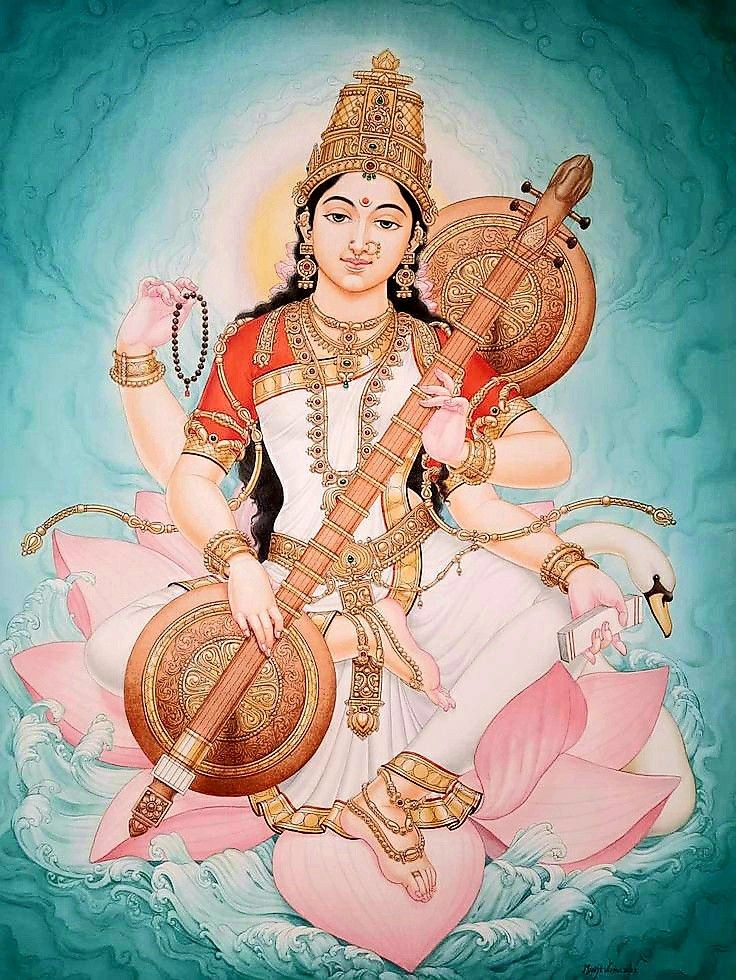
![सरस्वती अष्टकम स्तोत्र अर्थ सहित - Maa Saraswati Ashtakam Stotram with Meaning [Sanskrit Lyrics]](/assets/image/saraswatimata2.webp?nf_resize=fit&w=1200)

![संकट नाशन गणेश स्तोत्र अर्थ सहित - Sankat Nashan Ganpati Stotra with Meaning [Sanskrit Lyrics]](/assets/image/shri-sankat-nashan-ganpati-stotram-meaning-narad-muni.webp?nf_resize=fit&w=300&format=webp)


![Wallpaper Image for 'ताराष्टकं स्तोत्र - Tara Ashtakam Stotram with Phalashruti [Sanskrit Lyrics]'](/assets/image/tara-devi-mahavidya.webp?nf_resize=fit&w=600&format=webp)