
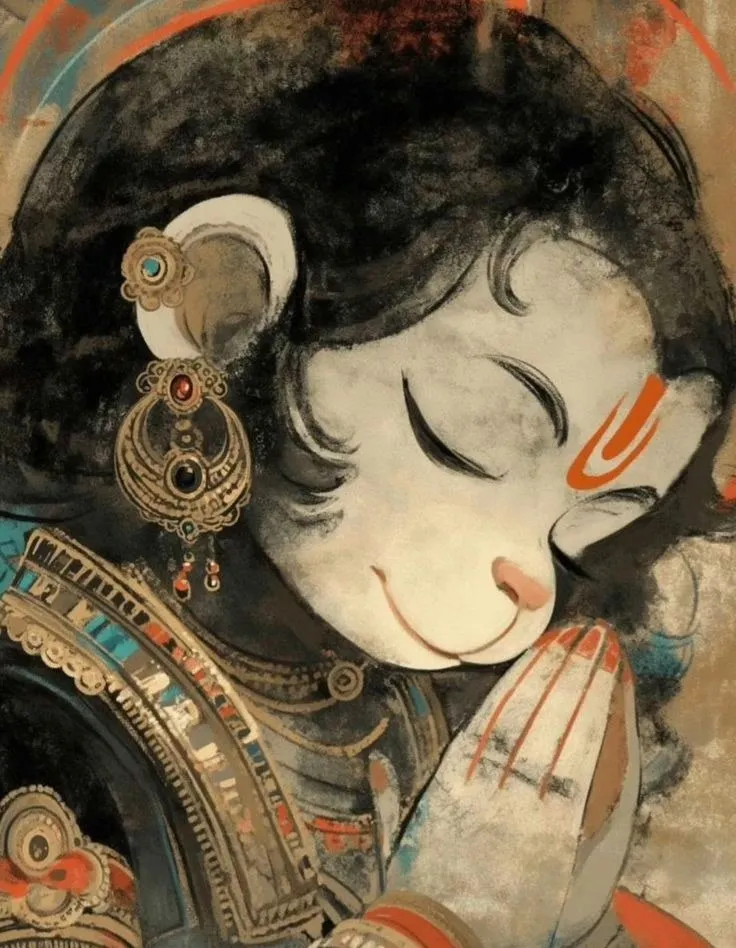
![आञ्जनेय द्वादश नामावली (हनुमान जी के १२ नाम) अर्थ सहित - [12 Names] Hanuman Anjaneya Dwadasha Namavali Sanskrit Lyrics with Meaning](/assets/image/shri-anjaneya-dwadasha-namavali-12-names-meaning.webp?nf_resize=fit&w=1200)
हनूमते नमः । अञ्जनासूनवे । वायुपुत्राय । महाबलाय । रामेष्टाय । फल्गुनसखाय । पिङ्गाक्षाय । अमितविक्रमाय । उदधिक्रमणाय । सीताशोकविनाशकाय । लक्ष्मणप्राणदात्रे । दशग्रीवस्यदर्पघ्ने नमः ।
Salutations to Hanuman, the mighty one, Salutations to Anjanasuta, the noble son of Mother Anjana, Salutations to Vayuputra, the powerful son of the wind god, Salutations to Mahabala, the one of immense and unmatched strength, Salutations to Rameshta, the one who is deeply devoted and beloved by Lord Rama, Salutations to Phalguna-sakha, the close and dear friend of Arjuna (Phalguna), Salutations to Pingaksha, the one with reddish-brown, shining eyes, Salutations to Amitavikrama, the one whose boundless valor knows no limits, Salutations to Udadhikramana, the one who crossed the mighty ocean with a single leap, Salutations to Sita-shoka-vinashaka, the one who destroyed Sita’s sorrow and brought her hope, Salutations to Lakshmana-prana-datra, the one who restored life to Lakshmana with the Sanjeevani herb, Salutations to Dashagriva-darpa-ghna, the one who shattered the pride and arrogance of Ravana, the ten-headed demon king. O Hanuman, I bow to You with all my heart. May You bless me with Your strength, devotion, courage, and wisdom. May Your divine qualities inspire me to walk the path of dharma, serve with selflessness, and remain steadfast in my love for the Lord.
हनूमते नमः — श्री हनुमानजी को प्रणाम, महाबली को नमस्कार। अञ्जनासूनवे नमः — माता अंजना के पुत्र को प्रणाम। वायुपुत्राय नमः — पवनदेव के पुत्र को नमस्कार। महाबलाय नमः — अत्यंत बलशाली को प्रणाम। रामेष्टाय नमः — श्रीराम के परम प्रिय भक्त को नमन। फल्गुनसखाय नमः — अर्जुन (फल्गुन) के प्रिय मित्र को प्रणाम। पिङ्गाक्षाय नमः — लाल-भूरी आँखों वाले दिव्य स्वरूप को नमस्कार। अमितविक्रमाय नमः — असीम पराक्रम वाले वीर को नमन। उदधिक्रमणाय नमः — समुद्र को एक छलांग में पार करने वाले को प्रणाम। सीताशोकविनाशकाय नमः — माता सीता का शोक हरने वाले को नमस्कार। लक्ष्मणप्राणदात्रे नमः — संजीवनी बूटी लाकर लक्ष्मणजी को प्राण देने वाले को प्रणाम। दशग्रीवस्यदर्पघ्ने नमः — दस सिरों वाले रावण का अहंकार चूर-चूर करने वाले को नमन। हे हनुमानजी, मैं अपने पूरे हृदय से आपके चरणों में शीश नवाता हूँ। कृपया मुझे अपनी शक्ति, भक्ति, साहस और बुद्धि का आशीर्वाद दें। आपके दिव्य गुण मुझे धर्म के मार्ग पर चलने की प्रेरणा दें, मुझे निःस्वार्थ सेवा सिखाएँ, और श्रीराम के प्रति मेरी भक्ति को अडिग बनाए रखें।

← Previous
12 द्वादश ज्योतिर्लिंग स्तोत्र अर्थ सहित - Dwadash Jyotirlinga Stotram by Adi Shankaracharya Sanskrit Lyrics with Meaning
Next →
माँ सरस्वती (१२ नाम) द्वादश नाम स्तोत्रम् अर्थ सहित - 12 Names Saraswati Mata Dwadash Naam Stotram Sanskrit Lyrics with Meaning

A Quick Divine Challenge
12 Names of Hanuman (हनुमान जी के १२ नाम) Word Search
▶ Play Now